The national completion rate for trade apprenticeships sits around 50% at the four-year mark according to NCVER. Half of the young people who enter into an apprenticeship or traineeship training contract don't make it to the end. Good training won't fix everything, but it plays a significant role — apprentices who are supported, engaged, and connected to their trade are more likely to finish. That's better for apprentices, better for employers, and better for the industry. At Inscope, we offer training that is flexible around your work schedule, delivered by experienced trainers who genuinely support apprentices throughout their apprenticeship journey.
Why the Apprenticeship Partnership Breaks Down
The relationship between employer, apprentice, and supervising registered training organisation (SRTO) a three-way partnership — but too often it functions more like a handover than a collaboration. Apprentices frequently don't know what they're entitled to, and employers don't always know their obligations or know what to expect from their RTO. This leaves apprentices without proper support and employers without visibility over how their apprentice is progressing. Research into the Australian Apprenticeship System has consistently found that while the apprenticeship model itself is valued, the on-the-ground experience is often inconsistent and disconnected.
How We Deliver Training
We believe in having trainers your apprentice knows by name, delivering our training around your work, having a true relationship with employers, and intervening early if an apprentice falls behind. We offer online, on-site and in-house training, each serves a different purpose and together they allow for a flexible training experience for employers while providing maximum support to apprentices.
Online training lets apprentices work through theory content around their site schedule. It provides a consistent knowledge base across a cohort and can be completed in short windows. But online delivery alone, without human support and structured checkpoints, is where apprentices disengage, so we build in regular touchpoints to catch that early.
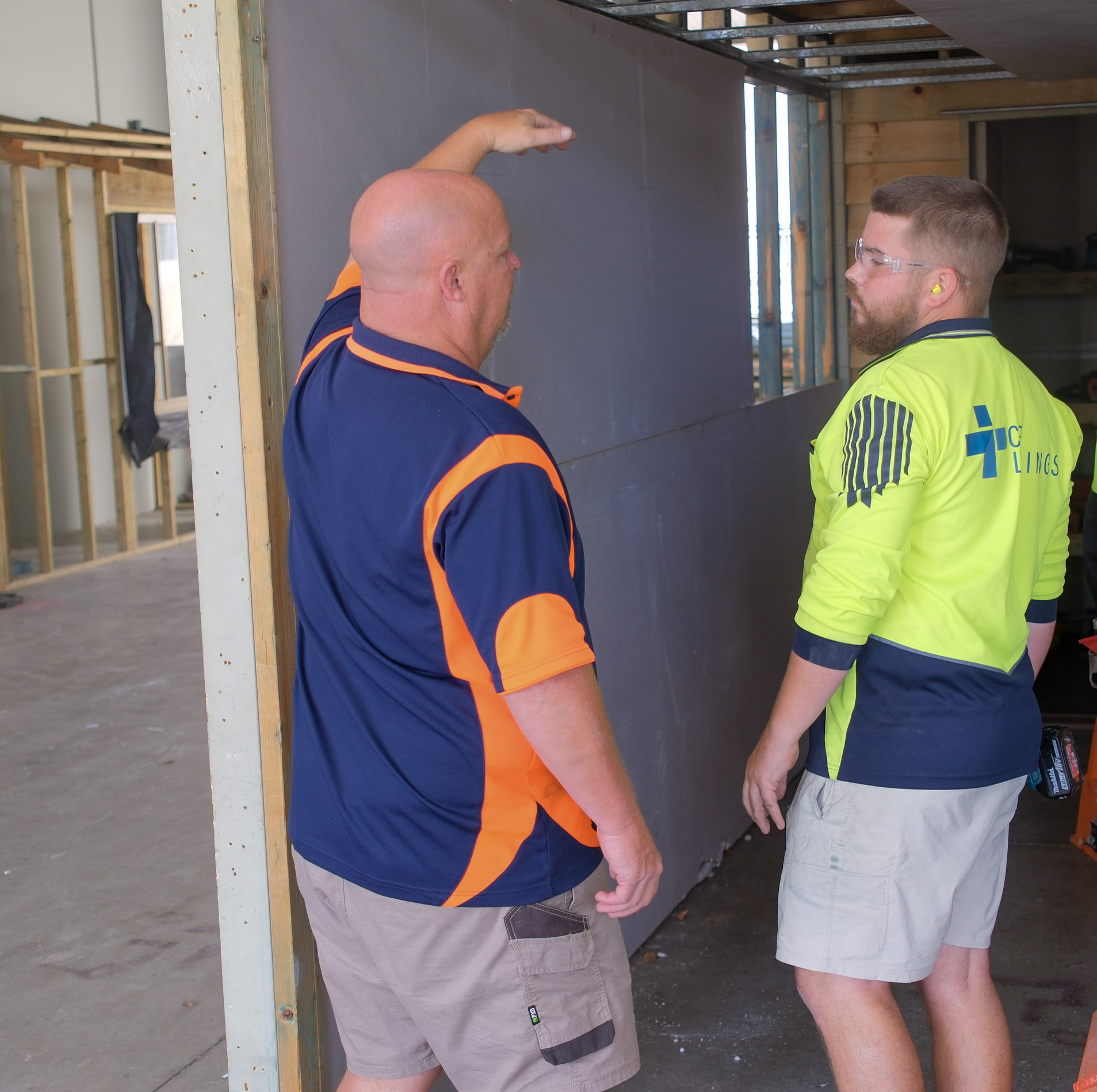
On-site training and assessment is where our trainers come to the workplace, it is key for providing flexibility. Our trainers assess apprentices completing real work in real conditions, ticking off units without disrupting the flow of the workday. It also gives our trainers a chance to check in with both the apprentice and the employer directly.
In-house training allows us as an SRTO to get apprentices to complete units in a simulated environment that they don’t have exposure to on-site. They can make mistakes in a risk-free environment, and they meet peers who are at the same stage. They realise the things they've been struggling with aren't unique to them, they can build relationships and feel a part of a bigger cohort giving them direction and confidence. In-house training also removes professional isolation and other drivers of attrition. Apprentices who feel disconnected from their trade, from their peers, and from a sense of forward momentum are the ones who quietly walk away. Face-to-face training is one of the few structural mechanisms in the system that directly addresses this (Greacen and Ross, 2023) (NCVER, 2001).
Our trainers are experienced in the trades they teach. Apprentices work with a consistent trainer who knows their progress, understands where they're at, and can provide reasonable adjustments for learning challenges.
What to Hold Your SRTO Accountable to
As an employer, it helps to know what your SRTO is required to do under the training contract. Under the training contract:
- Your SRTO will contact you to develop an individualised training plan for your apprentice. This allows the training plan to be developed to align with the employer’s role in planning and delivering workplace tasks and identifying any training gaps in the workplace that will need to be trained by the SRTO in a simulated training environment.
- If an apprentice falls behind, the SRTO must make contact and put a structured catch-up plan in place with clear progression milestones.
- Your SRTO must review and update the apprentices’ Training Record every 3 months. Reviewing the training record allows the SRTO to track training progress, be alert to any delays and react accordingly.
- Employer Resource Assessment must be reviewed with you as the employer at the time of developing the training plan and every three months to ensure that you have the resources to deliver training and apprentice supervision onsite. Where training falls short on-site, apprentices can come into our Training Centre for training.
If these things aren't happening, it's worth raising directly with your SRTO. A good training provider will have clear answers on all of the above and will treat you as an active partner in your apprentice's training. To find out more about how we deliver apprenticeship training visit: Information for Trade Employers | Inscope Training.