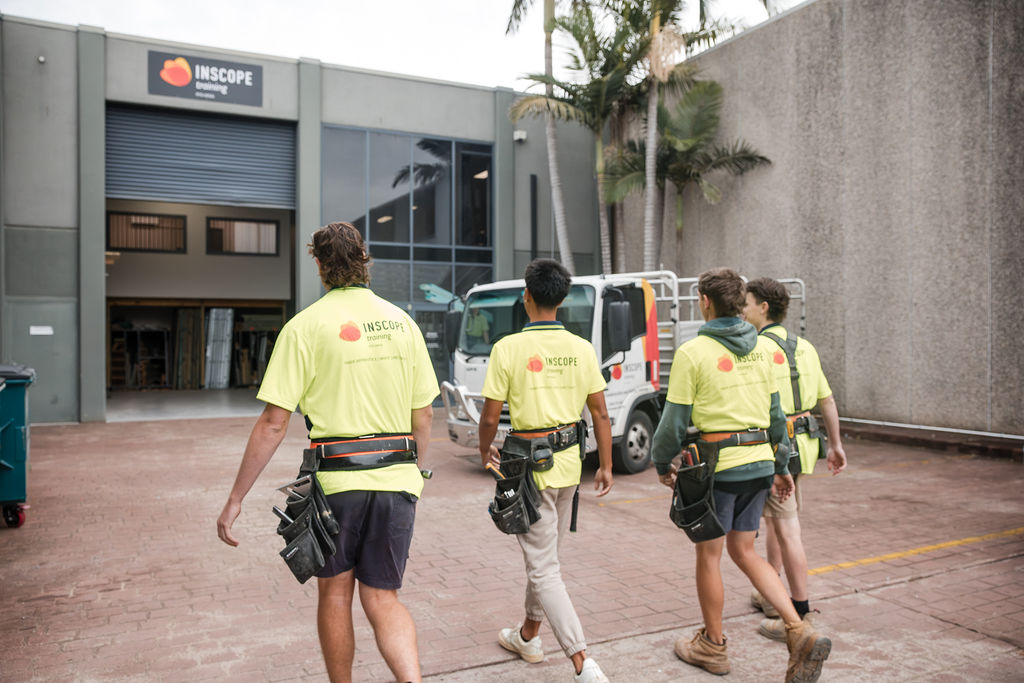
Choosing a trade is a decision plenty of school leavers and parents search for advice on and the honest answer is that there's no single right trade, only the right fit. Carpentry, plastering, tiling, and painting each involve different day-to-day work, suit different strengths, and lead to different long-term outcomes. It’s important to know what each trade involves, who tends to thrive in it, and how to test the waters before committing.
Carpenter - Certificate III in Carpentry (CPC30220): For the Builders and Problem-Solvers
Carpentry covers the full structural and finishing arc of a build from framing, structural work, fit-outs, joinery, doors, windows, and finishing details. It's varied by nature: no two jobs or projects look the same, and carpenters move between physical, hands-on structural work and precise, detail-driven finishing work.
A carpentry apprenticeship suits people who like to see a direct, tangible result from their effort. It rewards spatial thinking, impromptu problem-solving, and a strong work ethic. If you enjoyed woodwork or technology subjects at school, or you like figuring out how things fit together, carpentry is worth serious consideration. It's also currently the most in-demand trade occupation in the Queensland building sector, with strong job security stretching well into the next decade.
A carpentry qualification can lead to a variety of career opportunities across residential and commercial projects. Qualified carpenters may specialise in framing, formwork, fit-outs, renovations, roofing, or finishing work, contributing to all stages of the building process. With industry experience and additional VET qualifications, career progression can include roles such as Leading Hand, Site Supervisor, Construction Manager, or Licensed Builder, as well as the opportunity to establish and operate a successful trade or builder business.
Plasterer - Certificate III in Wall and Ceiling Lining (CPC31220): For the Methodical and Detail-Focused
Plastering, or wall and ceiling lining, involves installing and finishing external and internal linings. Day-to-day tasks include measuring and setting out plasterboard layout, installing insulation and moisture barriers, cutting and applying plasterboard according to plans, prepping corners, ceilings and other fittings, and installing fire-rated wall barriers.
A plastering apprenticeship is built on precision and consistency: getting a seamless finish takes patience, a steady hand, and an eye for small imperfections most people wouldn't notice. This trade suits people who are methodical, enjoy repetitive but skill-based work, and take pride in a clean, professional finish. It's also a trade with clear pathways into supervision and licensing once qualified.
A wall and ceiling lining qualification can open the door to careers in both residential and commercial construction, installing and finishing plasterboard systems, ceiling systems, fire-rated walls, and partition structures. Qualified plasterers may specialise in external and internal linings, suspended ceilings, commercial fit-outs, or decorative finishes. With experience and additional VET qualifications, career development can lead to positions such as Leading Hand, Site Supervisor, Construction Manager, or the opportunity to establish and grow a plastering contracting business.
Tiler - Certificate III in Wall and Floor Tiling (CPC31320): For the Precise and Design-Minded
Tiling work involves laying and finishing tiles across floors, walls, and wet areas — bathrooms, kitchens, outdoor areas — requiring accurate measurement, cutting, and layout planning before a single tile goes down. Tilers cut and shape tiles to suit environments, apply tiles, prepare and apply grout finishes and apply waterproofing systems. Getting the pattern, spacing, and alignment right takes strong spatial awareness and an eye for how a finished space will look.
A tiling apprenticeship suits people who enjoy precision work and have a creative or design-oriented streak, since the finished product is highly visible and aesthetic. Tilers should have strong hand-eye coordination and the ability to make simple calculations. If you like the idea of a trade that blends technical accuracy with a visual, design-conscious outcome, tiling is worth exploring.
A wall and floor tiling qualification can provide pathways into residential construction, commercial developments, renovations, and specialist tiling projects. Qualified tilers may work with ceramic, porcelain, natural stone, mosaics, and large-format tiles across a range of environments. With industry experience and further training, opportunities can extend to supervisory positions such as Site Supervisor or Project Manager, specialist waterproofing and stone installation roles, or operating an independent tiling and waterproofing business.
Painter - Certificate III in Painting and Decorating (CPC30620): For the Adaptable and Detail-Oriented
Painting and decorating covers surface preparation, application, and finishing across residential and commercial projects — sanding, priming, colour matching and mixing, and applying different techniques and finishes depending on the job. It's a trade that rewards patience and consistency, since preparation work often determines the quality of the final result more than the paint itself.
A painting apprenticeship suits people who are adaptable, comfortable working across a wide range of environments and surfaces including at heights, and who take satisfaction in transforming a space. If you enjoy repetitive but skill-based work and enjoy seeing a visible, immediate transformation, painting is a strong option.
A painting and decorating qualification can lead to a variety of career opportunities across residential, commercial and industrial projects. Qualified painters may specialise in new builds, repaints, decorative finishes, heritage restoration, or protective coatings. With experience and additional VET qualifications, career progression can include roles such as Leading Hand, Site Supervisor, Estimator, Project Coordinator, or establishing and managing a successful painting and decorating business.
Not Sure Yet? Try Work Experience or a Certificate II in Construction Pathways (CPC20220)
If you're asking yourself which trade, you don't need to commit blind. Two options let you test the waters before signing up to a four-year apprenticeship:
Work Experience gives you direct, short-term exposure to a trade on a real site, working alongside qualified tradespeople. It's one of the fastest ways to find out whether the day-to-day reality of a trade career matches what you imagined.
A Certificate II in Construction Pathways (CPC20220) is a broader foundation qualification, typically delivered through a school's vocational pathway to students in Years 10 to 12. Rather than locking you into one trade, it gives you hands-on exposure to industry practices across multiple trade areas. Students develop skills in:
- Workplace health and safety
- Using construction tools and equipment
- Measuring and calculating materials
- Reading plans and specifications
- Working effectively in a construction environment
- Communication and teamwork
By combining practical learning with real-world industry knowledge, students can gain confidence in their career choice and create a clear pathway from school into an apprenticeship, nationally recognised qualifications, and a rewarding career in the building and construction industry. This helps students build foundational skills and for many can entirely remove the guesswork around choosing a Certificate III pathway. Units in the qualification can also be credited towards any like for like units in their chosen apprenticeship qualification.
The Right Trade Is the One That Fits You
There's no universal best trade, only the one that matches how you think, work, and want to spend your days. Carpentry rewards structural problem-solving, plastering rewards precision and consistency, tiling rewards design-minded accuracy, and painting rewards repetition and transformation.
Construction apprenticeships offer career pathways into a growing industry. Building and construction careers continue to experience strong demand for skilled tradespeople. As experienced workers retire and population growth drives demand for housing and infrastructure, qualified carpenters, painters, plasterers and tilers remain highly sought after across the country.
Inscope Training is a Registered Training Organisation delivering apprenticeship training in carpentry, plastering, tiling, and painting in Queensland and New South Wales, along with the Certificate II in Construction Pathways for schools across Queensland.
If you’re interested in exploring a trade, organising work experience, or setting up a VETiS partnership for your school – get in touch with Inscope Training to find out how we can help you start your pathway today.